





Battery Compatibility and Efficiency for Pure Sine Car Inverters
- Understanding battery-inverter interactions
- Why battery chemistry matters
- Voltage, C-rate and inverter compatibility
- Optimizing efficiency: inverter characteristics and real-world performance
- Inverter efficiency curves and practical load ranges
- How battery state-of-charge (SoC) affects efficiency
- Practical sizing and wiring: examples and calculations
- Step-by-step sizing example
- Wire gauge, fusing and thermal considerations
- Battery types compared for car pure sine inverter use
- Comparison table: key attributes
- Which to choose for a car inverter pure sine wave setup?
- Reliability, standards and long-term maintenance
- Standards and safety considerations
- Maintenance tips to preserve efficiency and battery life
- Guangzhou Congsin Electronic Technology Co., Ltd.: capabilities and relevant products
- Company overview and manufacturing strengths
- Relevant product lines and customization
- Why Congsin stands out
- FAQ
- 1. Can I use any 12 V car battery with a 12 V car inverter pure sine wave?
- 2. How much inverter efficiency will I lose if my battery voltage sags under load?
- 3. Is a pure sine wave inverter necessary for car appliances?
- 4. How do I size battery capacity for overnight or multi-hour use?
- 5. What cables and protections should I install between battery and inverter?
- 6. How do environmental temperature and charging strategy affect battery life?
I often get asked by fleet operators, RV owners and installers: how do I pair a car inverter pure sine wave unit with the right battery so it runs efficiently, delivers reliable surge power and maximizes battery life? In this article I distill decades of field experience and industry guidance into practical, verifiable recommendations. I cover battery chemistries, system voltages, sizing calculations, wiring and thermal considerations, plus real-world efficiency data and troubleshooting tips. Where useful, I include references to authoritative sources and give concrete examples you can apply to your vehicle or mobile system.
Understanding battery-inverter interactions
Why battery chemistry matters
Different battery chemistries—flooded lead-acid, AGM, GEL, lithium iron phosphate (LiFePO4) and other lithium-ion variants—have distinct voltage profiles, internal resistance, allowable discharge rates (C‑rate) and thermal behavior. These parameters directly affect how a car inverter pure sine wave performs under steady and surge loads.
In practice I prefer LiFePO4 for mobile pure sine inverter systems when weight, cycle life and usable state-of-charge matter, because LiFePO4 typically supports higher usable depth-of-discharge (DoD) (80–100%) and better cycle life (2000–4000+ cycles) than lead-acid types. For lower-cost builds or where budget and simplicity dominate, AGM or deep-cycle flooded lead-acid remain common—but they require derating and more conservative DoD to preserve life. For a good primer on battery types and cycle life see Battery University.
Voltage, C-rate and inverter compatibility
Most car-based pure sine inverters operate on 12V, 24V or 48V DC input. Selecting the correct battery voltage and ensuring the battery can supply the inverter’s continuous and peak currents is essential. For instance, a 2000 W pure sine wave inverter at 12 V draws up to ~167 A continuous (2000 W ÷ 12 V = 166.7 A), plus additional surge current for motor starts. If the battery cannot safely deliver that current (due to low C‑rate or high internal resistance), voltage sag will trigger low-voltage shutdowns or reduce inverter efficiency.
When sizing, check the battery datasheet for recommended maximum discharge current (often given as C or A). Many LiFePO4 cells can sustain 1C to 3C discharge, whereas deep-cycle lead-acid batteries typically tolerate lower C‑rates.
Optimizing efficiency: inverter characteristics and real-world performance
Inverter efficiency curves and practical load ranges
Pure sine wave inverters have a non-linear efficiency curve: efficiency is lower at very light loads (inverter idle losses become significant) and peaks near moderate to high loads (often 50–80% of rated power). Typical high-quality pure sine car inverters reach 90–95% efficiency at 50–75% load. At 10–20% load efficiency may drop to the mid-80s or lower.
Below is a representative efficiency table based on measured curves from reputable inverter manufacturers and product datasheets (values are typical ranges and should be verified against the specific model you use):
| Load (% of rated) | Typical Efficiency (%) | Implication |
|---|---|---|
| 0–10% | 60–85 | Idle losses dominate; inefficient for low continuous draws |
| 10–30% | 80–90 | Improved but still below peak; better with inverter economy modes |
| 30–80% | 90–95 | Most efficient operating band |
| 80–100% | 85–93 | Efficiency drops slightly; ensure thermal and surge margins |
Sources for typical curves include manufacturer datasheets and independent tests; see product pages such as Victron Energy’s inverter manuals and various product datasheets for model-specific curves (example: Wikipedia - Inverter (electrical) and manufacturer datasheets).
How battery state-of-charge (SoC) affects efficiency
Battery internal resistance and terminal voltage vary with SoC and temperature. At low SoC, terminal voltage is lower and internal resistance is often higher; the inverter must draw more current to maintain AC output, increasing I²R losses in wiring and inside the battery. The net effect: reduced system efficiency and elevated heat. This is why I recommend avoiding deep discharge of lead-acid systems and preferring higher SoC operation for best inverter efficiency unless using LiFePO4 designed for deep cycling.
Practical sizing and wiring: examples and calculations
Step-by-step sizing example
Scenario: You want to run a 600 W microwave (assume starting surge 1200 W) and a 120 W laptop from a car inverter pure sine wave for 30 minutes. Which battery system do you pick?
Step 1: Calculate continuous load: 600 + 120 = 720 W. Include inverter efficiency: assume 92% → DC input = 720 ÷ 0.92 ≈ 783 W.
Step 2: Battery current at 12 V: 783 ÷ 12 ≈ 65.3 A. For surge, 1200 W → DC ≈ 1200 ÷ 0.92 ≈ 1304 W → surge current ≈ 109 A. Ensure the chosen battery and cables can handle both continuous (~65 A) and surge (~110 A) currents without excessive voltage sag.
Step 3: Energy required for 0.5 hr: 783 W × 0.5 = 391.5 Wh. Add 10–15% margin for Peukert effect and inefficiencies → ~450 Wh usable. If using LiFePO4 (80% usable by design), choose a battery with at least 560 Wh nominal (e.g., 12 V × 50 Ah = 600 Wh). For lead-acid limited to 50% DoD, you would need double the capacity (~1200 Wh or 12 V × 100 Ah).
Wire gauge, fusing and thermal considerations
High DC currents require appropriately sized cable and proper fusing close to the battery. For the example above (~70–110 A), I recommend at least 2/0–4 AWG for runs longer than 1–2 meters, depending on length, with calculation per NEC or ISO wiring tables. Undersized cables increase voltage drop, decrease effective power to the inverter, and create heat risk. Always fuse at the battery-side with a fuse or breaker rated slightly above the inverter continuous input rating.
Battery types compared for car pure sine inverter use
Comparison table: key attributes
| Attribute | Flooded Lead-Acid | AGM/GEL | LiFePO4 |
|---|---|---|---|
| Usable DoD | 30–50% | 40–60% | 80–100% |
| Cycle Life | 200–600 cycles | 300–800 cycles | 2000–5000 cycles |
| Max Recommended C‑rate | 0.2–0.5C | 0.5–1C | 1–3C+ |
| Weight / Energy Density | Low | Moderate | High |
| Cost per Wh | Low | Moderate | High (but lower lifecycle cost) |
Data sources: typical manufacturer datasheets and industry summaries; for broad industry context see Wikipedia - Battery (electricity) and detailed chemistry guidance at Battery University.
Which to choose for a car inverter pure sine wave setup?
If your priorities are compactness, cycle life and consistent voltage under load (e.g., professional mobile offices, ambulances, VRs, event trucks), LiFePO4 is usually the best technical choice. If budget is constrained and weight/space are less important (e.g., infrequent use), AGM may suffice. I advise sizing for realistic DoD and confirming the battery's recommended discharge current supports inverter surge demands.
Reliability, standards and long-term maintenance
Standards and safety considerations
Professionally installed inverter systems should follow recognized safety and electromagnetic compatibility standards. Grid-interactive and transfer-inverter systems reference IEEE standards (e.g., IEEE 1547 for interconnection) and many inverters carry CE, EMC, LVD, ETL or FCC approvals. For general quality systems, ISO 9001 certification demonstrates a manufacturer's management system for consistent product quality—see ISO 9001.
Maintenance tips to preserve efficiency and battery life
- Avoid continuous operation below recommended SoC for your battery chemistry.
- Keep battery terminals clean, tight and corrosion-free; high contact resistance reduces effective efficiency.
- Maintain appropriate ambient temperature: LiFePO4 prefers 0–45°C for cycling; cold environments reduce effective capacity.
- Use an inverter with low idle consumption or an economy/eco mode for long periods of light load.
Guangzhou Congsin Electronic Technology Co., Ltd.: capabilities and relevant products
Company overview and manufacturing strengths
As someone who has collaborated with OEMs and suppliers, I value partners with deep experience and robust production practices. Guangzhou Congsin Electronic Technology Co., Ltd., founded in early 1998, brings over 27 years of focused experience manufacturing power inverters and portable power solutions. They operate fully automated production lines and advanced testing laboratories to ensure product reliability and consistent efficiency. Their quality system is ISO9001 certified and many products carry CE, EMC, LVD, ETL, FCC, RoHS and E‑MARK approvals—reassuring for integrators who must meet regulatory and field reliability demands. For more on their offerings see www.csinverter.com.
Relevant product lines and customization
Congsin’s catalog includes over 100 models designed for vehicles, solar systems, RVs, trucks and off-grid homes. Important product families for car-based pure sine inverter systems include:
- Pure sine wave inverters (12 V / 24 V / 48 V variants) engineered for low total harmonic distortion (THD) and high surge capability.
- Modified sine wave inverters for budget applications where compatible.
- Solar charge controllers to integrate vehicle-mounted solar with battery and inverter systems.
- Portable power stations that combine battery, inverter and BMS for plug-and-play use.
They support OEM/ODM, private labeling and customized solutions—a benefit when a tailored voltage, communication protocol (CAN/RS485) or enclosure is required.
Why Congsin stands out
From my professional perspective, Congsin differentiates itself by combining long-term manufacturing experience with strong test automation and multiple patents that back incremental improvements in efficiency and reliability. Their global footprint—serving Europe, the Americas, the Middle East, Africa and Southeast Asia—along with OEM supply channels, demonstrates both scale and product acceptance in diverse regulatory markets.
If you’d like system-level recommendations or to evaluate inverter models compatible with specific batteries, I and the team at Guangzhou Congsin can help specify matched sets (inverter rating, battery capacity and wiring) to meet runtime and surge requirements for your vehicle or mobile installation. Contact: info@csinverter.com or visit www.csinverter.com.
FAQ
1. Can I use any 12 V car battery with a 12 V car inverter pure sine wave?
No. Not all 12 V batteries are suitable. You must match the battery’s available continuous and surge current ratings, usable DoD and temperature tolerance to your inverter’s needs. A standard starting battery is not a good choice for sustained inverter loads; choose a deep-cycle AGM, GEL or LiFePO4 battery sized appropriately.
2. How much inverter efficiency will I lose if my battery voltage sags under load?
Voltage sag increases DC current for the same AC output, which increases I²R losses in wiring and battery internal heating. Efficiency decline depends on magnitude of sag; in severe sag, inverter may drop out. Maintaining short, thick cables and batteries with low internal resistance minimizes this loss.
3. Is a pure sine wave inverter necessary for car appliances?
Many sensitive electronics, motor-driven appliances and chargers require a clean sine wave. Pure sine inverters produce low total harmonic distortion (THD) and are recommended for laptops, medical equipment, motor compressors and modern chargers. Modified sine is acceptable for simple resistive loads but can damage or overheat some devices.
4. How do I size battery capacity for overnight or multi-hour use?
Estimate continuous AC wattage, divide by inverter efficiency to get DC wattage, multiply by hours required to get Wh. Add margin (10–30%) for inefficiencies and Peukert effect. Divide by system voltage to obtain amp-hours (Ah). Adjust Ah upward according to allowable DoD for the battery chemistry.
5. What cables and protections should I install between battery and inverter?
Use cables sized for the continuous current with minimal voltage drop (consult AWG tables). Install a battery-side fuse or breaker rated just above inverter continuous current near the battery. Use proper terminal lugs, strain relief and route cables away from heat sources.
6. How do environmental temperature and charging strategy affect battery life?
High temperatures accelerate capacity fade for all chemistries; cold reduces usable capacity temporarily. Follow manufacturer charge profiles: LiFePO4 needs a specific charger/BMS; lead-acid benefits from float charging and periodic equalization (for flooded types) to maintain capacity.
References and helpful standards:
- Wikipedia – Inverter (electrical)
- Battery University – Battery guides and datasheets
- IEEE 1547 – Interconnection standards (overview)
- ISO 9001 – Quality management systems
If you need help selecting a car inverter pure sine wave model and matching battery pack for a specific vehicle, load profile or regulatory requirement, contact me or Guangzhou Congsin Electronic Technology Co., Ltd. Our combined application experience can produce a reliable, efficient, and tailored solution. For inquiries or product details: www.csinverter.com or info@csinverter.com.
Bidirectional vs Hybrid Inverters: Key Differences
Cost vs Performance: Budget Pure Sine Car Inverters Worth Buying
Top Benefits of Pure Sine Wave Inverters for Electronics
Top 10 pure sine wave inverter Manufacturers and Supplier Brands
Modified Sine Wave Inverters
Can it drive a 3000W air conditioner?
Yes. Air conditioners have instantaneous power during startup (about 2-3 times the rated power), and this product has a peak power of 6000W, which can meet the startup and operation needs of a 3000W air conditioner; the battery capacity must be ≥150Ah to ensure continuous power supply.
What is the difference between modified sine wave and pure sine wave?
Modified sine wave is suitable for most ordinary home appliances and electronic devices; pure sine wave is suitable for devices with extremely high power requirements (such as precision instruments). This modified sine wave is more cost-effective and meets the needs of most daily scenarios.
Do you support OEM branding?
Yes, we offer logo, packaging, and label customization.
Is customization available?
OEM/ODM support for logo, color, and packaging design.
What devices can be powered by the cigarette lighter port?
The cigarette lighter port can be used for car air pumps, car refrigerators, car vacuum cleaners and other conventional cigarette lighter powered devices, as long as the power does not exceed 300W.
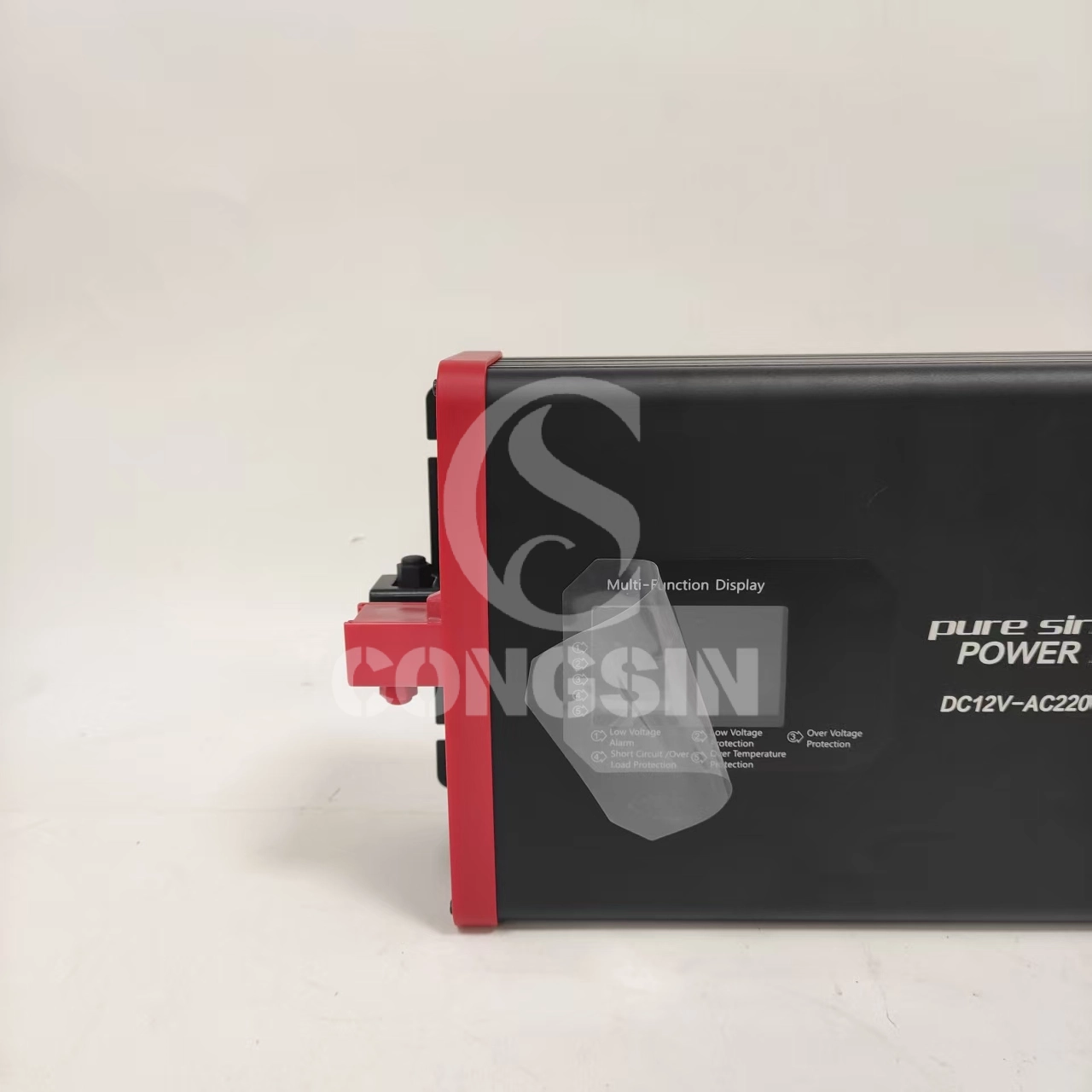
Manufacturer Wholesales 3000W Single Phase Power Inverter Home Camping Appliance
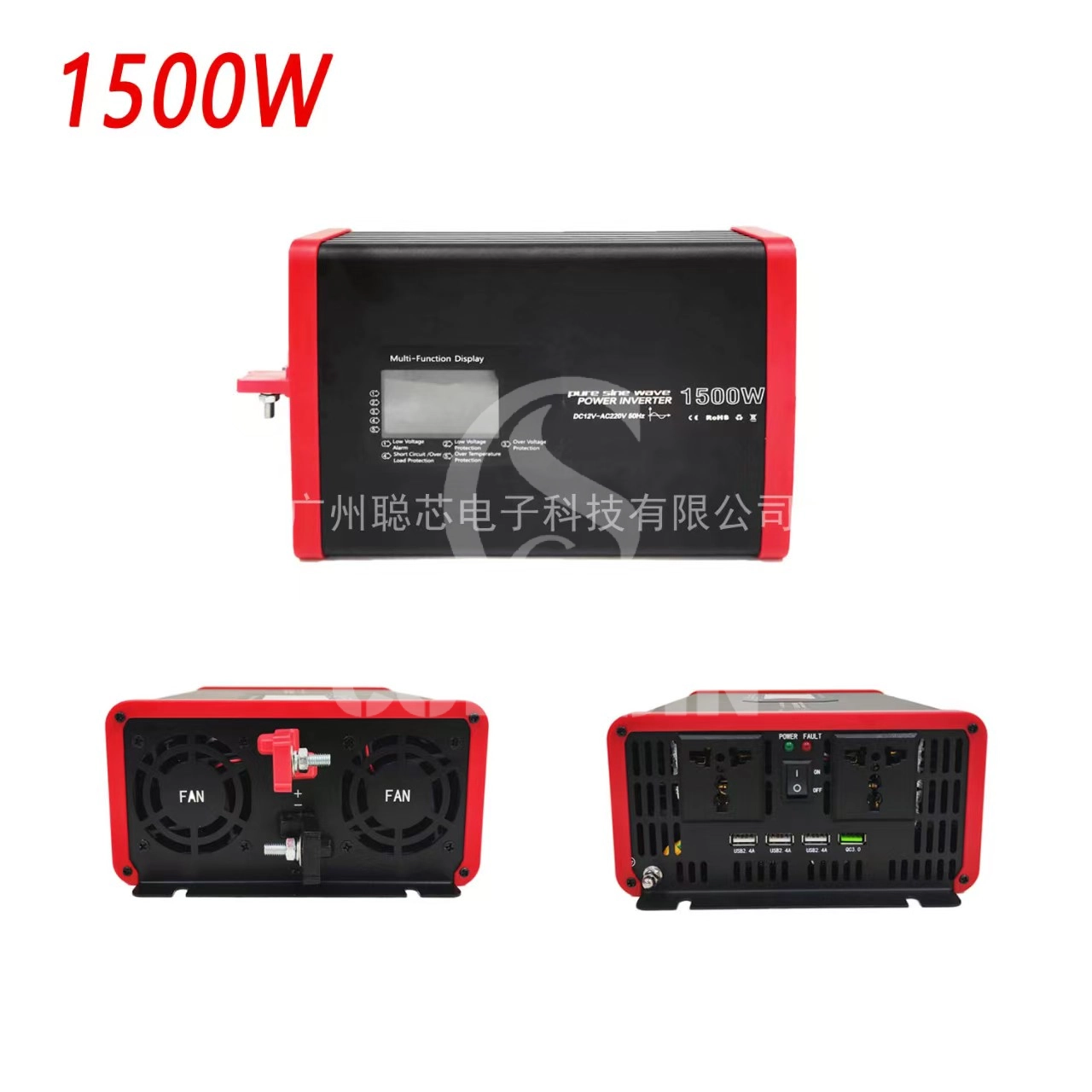
1500W Off-grid Sine Wave Inverter Pure Sine Wave Inverter with LCD Display and OEM Available

Factory Direct Grid-Tie Solar Inverter, Off Grid & On Grid Dual Mode Hybrid Inverter with MPPT Controller
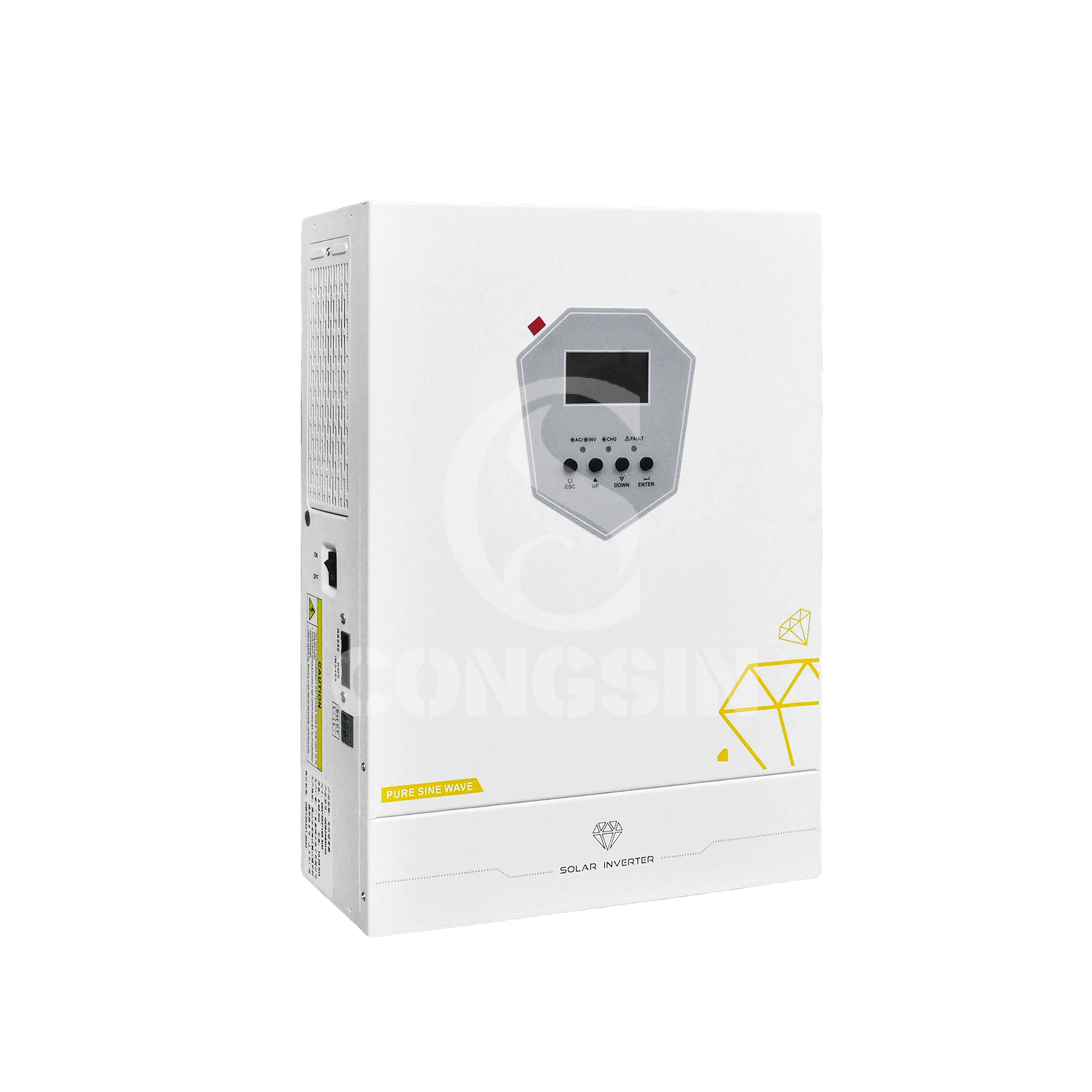
Factory Direct Sales 6000W Hybrid Solar Power Inverter with Controller and LCD Display

CONGSIN is a trusted OEM factory for power inverters, solar charge controllers, and DC converters. Reliable solutions for global B2B buyers.
 High Quality
 7/24 Service
 Guaranteed Warranty
© 2025 Congsin. All Rights Reserved.
 WeChat
 Scan QR Code
sin cong
teaimei10
Whatsapp: +8618028086791
Scan QR Code